(English Below)
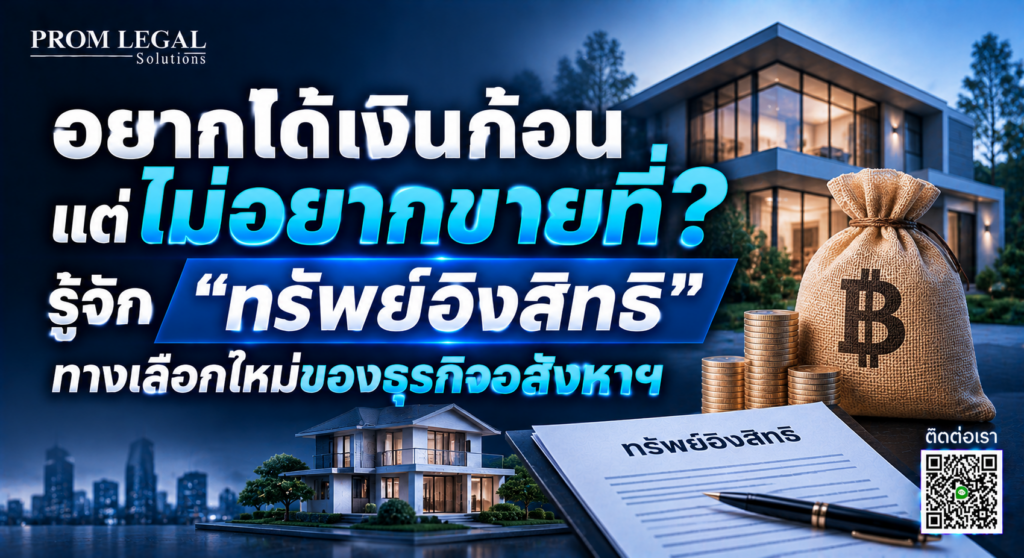
เจ้าของที่ดินและผู้พัฒนาโครงการหลายรายมีโจทย์เดียวกัน คืออยากได้เงินก้อนจากทรัพย์สินที่มีอยู่ แต่ไม่อยากขายขาด ส่วนฝั่งผู้ลงทุนที่เช่าระยะยาวก็ติดปัญหาว่า สิทธิการเช่าโอนต่อยาก ตกทอดทางมรดกไม่ได้ และใช้เป็นหลักประกันกับธนาคารได้ยาก
เปรียบง่าย ๆ ทรัพย์อิงสิทธิเหมือน “การให้เช่าเวอร์ชันอัปเกรด” คือเจ้าของยังถือโฉนดไว้ในมือ แต่ขายสิทธิใช้ประโยชน์ออกไปได้เหมือนทรัพย์สินชิ้นหนึ่งที่โอน จำนอง และตกทอดทางมรดกได้ วันนี้ Prom Legal Solution ขอพาไปดูว่าทรัพย์อิงสิทธิคืออะไร ธุรกิจอสังหาฯ ใช้ประโยชน์ได้อย่างไร และต้องระวังอะไรก่อนไปจดทะเบียนค่ะ
ทรัพย์อิงสิทธิคืออะไร ต่างจากการเช่าอย่างไร
ทรัพย์อิงสิทธิ คือ “ทรัพย์สินที่อิงจากสิทธิการใช้ประโยชน์ในอสังหาริมทรัพย์” ตาม พระราชบัญญัติทรัพย์อิงสิทธิ พ.ศ. 2562 มาตรา 3 โดยเจ้าของเป็นผู้ขอก่อตั้งต่อสำนักงานที่ดิน พนักงานเจ้าหน้าที่จดทะเบียนไว้ในโฉนดหรือหนังสือกรรมสิทธิ์ห้องชุด และออกหนังสือรับรองทรัพย์อิงสิทธิ (มาตรา 4, 5) จากนั้นสิทธินี้จะซื้อขาย จำนอง หรือตกทอดทางมรดกได้เหมือนทรัพย์สินชิ้นหนึ่ง (มาตรา 12)
กฎหมายฉบับนี้ประกาศในราชกิจจานุเบกษาเมื่อวันที่ 30 เมษายน 2562 และมีผลใช้บังคับเมื่อวันที่ 27 ตุลาคม 2562
| ประเด็น | การเช่า (ป.พ.พ.) | ทรัพย์อิงสิทธิ |
| สภาพของสิทธิ | สิทธิตามสัญญา ผูกพันเฉพาะคู่สัญญา | ทรัพย์สินที่โอน จำนอง และตกทอดได้ |
| การโอนให้ผู้อื่น | โอนสิทธิการเช่าต่อยาก ต้องได้ความยินยอมผู้ให้เช่า (ป.พ.พ. มาตรา 544) | โอนได้โดยทำเป็นหนังสือและจดทะเบียน (มาตรา 12) |
| ใช้เป็นหลักประกัน | นำสิทธิการเช่าไปจำนองไม่ได้ | จำนองกับสถาบันการเงินได้ (มาตรา 12) |
| ตกทอดทางมรดก | โดยหลักเป็นสิทธิเฉพาะตัว มักสิ้นสุดเมื่อผู้เช่าตาย | ตกทอดทางมรดกได้ (มาตรา 12) |
| ระยะเวลา | เช่าอสังหาฯ เกิน 30 ปีไม่ได้ (ป.พ.พ. มาตรา 540) | ก่อตั้งได้ไม่เกิน 30 ปี (มาตรา 4) |
| สถานะผู้ใช้ | เป็นผู้เช่า | ใช้ประโยชน์เสมือนเจ้าของ (มาตรา 11) |
แล้ว “99 ปี” ที่เป็นข่าว ตอนนี้ใช้ได้หรือยัง
หลายคนสับสนเพราะรัฐบาลมีนโยบายขยายกำหนดเวลาเป็น 99 ปี ข้อเท็จจริง ณ ปัจจุบัน (พฤศจิกายน 2569) คือ กรมที่ดินได้เปิดรับฟังความคิดเห็นร่างแก้ไข พ.ร.บ.ทรัพย์อิงสิทธิ ช่วงเดือนสิงหาคมถึงกันยายน 2568 โดยร่างดังกล่าวให้กำหนดเวลาไม่เกิน 99 ปี เฉพาะกรณีหน่วยงานของรัฐเป็นผู้ก่อตั้ง แต่ร่างนี้ยังไม่มีผลใช้บังคับ กฎหมายที่ใช้อยู่จึงยังกำหนดไว้ ไม่เกิน 30 ปี เท่านั้น
อสังหาฯ แบบไหนจดได้ และต้องมีเงื่อนไขอะไร
ทรัพย์อิงสิทธิก่อตั้งได้เฉพาะทรัพย์ที่มีโฉนดหรือหนังสือกรรมสิทธิ์ห้องชุด และเจ้าของต้องเป็นผู้ยื่นคำขอเอง (มาตรา 3, 4)
- ทรัพย์ที่จดได้: ที่ดินที่มีโฉนด ที่ดินพร้อมสิ่งปลูกสร้างในที่ดินที่มีโฉนด และห้องชุดตามกฎหมายอาคารชุด ส่วนที่ดิน น.ส.3 หรือ น.ส.3 ก. ไม่อยู่ในนิยาม
- ระยะเวลา: กำหนดได้ไม่เกิน 30 ปี
- ต้องจดทั้งแปลงหรือทั้งห้อง: จะก่อตั้งเฉพาะบางส่วนของทรัพย์ตามโฉนดหรือหนังสือกรรมสิทธิ์ห้องชุดไม่ได้
- ทรัพย์ติดภาระ: หากติดจำนอง ติดหลักประกันทางธุรกิจ หรือมีสิทธิอื่นจดทะเบียนอยู่ ต้องได้รับความยินยอมเป็นหนังสือจากผู้รับจำนอง ผู้รับหลักประกัน หรือผู้มีสิทธินั้นก่อน
เมื่อยื่นคำขอแล้ว พนักงานเจ้าหน้าที่จะจดทะเบียนไว้ในโฉนดหรือหนังสือกรรมสิทธิ์ห้องชุด และออกหนังสือรับรองทรัพย์อิงสิทธิ 2 ฉบับ ฉบับหนึ่งมอบให้เจ้าของ อีกฉบับเก็บไว้ที่สำนักงาน (มาตรา 5)
ส่วนค่าธรรมเนียมกำหนดในกฎกระทรวง แต่ต้องไม่เกินเพดานในบัญชีท้าย พ.ร.บ. (มาตรา 16) เช่น จดทะเบียนก่อตั้งไม่เกิน 20,000 บาทต่อครั้ง จดทะเบียนโอนไม่เกินร้อยละ 2 ของราคาที่แสดง และจดทะเบียนจำนองไม่เกินร้อยละ 1 ของจำนวนที่จำนอง
ธุรกิจอสังหาฯ ใช้ประโยชน์ได้อย่างไร
จุดเด่นคือ เจ้าของได้เงินก้อนจากการขายสิทธิใช้ประโยชน์ โดยยังถือกรรมสิทธิ์และได้ทรัพย์คืนเมื่อครบกำหนด โครงสร้างธุรกรรมที่พบบ่อยมีดังนี้
- เจ้าของยื่นก่อตั้งทรัพย์อิงสิทธิในแปลงที่ดินหรือห้องชุดของตน และรับหนังสือรับรองไว้ก่อน (มาตรา 4, 5)
- เจ้าของขายหรือโอนทรัพย์อิงสิทธิให้ผู้ซื้อ (ผู้ทรงทรัพย์อิงสิทธิ) โดยทำเป็นหนังสือและจดทะเบียน (มาตรา 12)
- ผู้ทรงทรัพย์อิงสิทธิใช้สิทธิได้เสมือนเจ้าตลอดกำหนดเวลา (มาตรา 10, 11) จะใช้เอง นำออกให้เช่า หรือขายต่อก็ได้ และนำสิทธิไปจำนองกับสถาบันการเงินได้ (มาตรา 12)
- ระหว่างนั้นเจ้าของยังขายกรรมสิทธิ์ หรือนำทรัพย์ไปจำนองหรือใช้เป็นหลักประกันทางธุรกิจได้ โดยทรัพย์อิงสิทธิยังคงจดทะเบียนอยู่ในโฉนดหรือหนังสือกรรมสิทธิ์ห้องชุด (มาตรา 9 วรรคสอง)
สำหรับธุรกิจอสังหาฯ โครงสร้างนี้เปิดทางให้ขายสิทธิใช้บ้าน ห้องชุด หรือพื้นที่พาณิชย์ระยะยาวแทนการขายขาด โดยทั่วไปผู้ซื้อจ่ายน้อยกว่าการซื้อกรรมสิทธิ์ แต่ได้สิทธิที่มั่นคงกว่าสิทธิการเช่า ส่วนการที่สถาบันการเงินแต่ละแห่งจะรับทรัพย์อิงสิทธิเป็นหลักประกันหรือไม่ เป็นนโยบายสินเชื่อที่ต้องตรวจสอบเป็นรายกรณี
กรณีผู้ซื้อเป็นคนต่างด้าว พ.ร.บ.ทรัพย์อิงสิทธิไม่มีบทบัญญัติจำกัดสัญชาติของผู้ทรงทรัพย์อิงสิทธิ แต่การใช้ประโยชน์ยังต้องเป็นไปตามกฎหมายอื่น เช่น กฎหมายว่าด้วยการประกอบธุรกิจของคนต่างด้าว และต้องระวังโครงสร้างที่อาจถูกมองว่าเป็นการหลีกเลี่ยงข้อจำกัดการถือครองที่ดินของคนต่างด้าว เช่น การใช้ตัวแทนอำพราง (นอมินี)
ข้อควรระวังก่อนจดทะเบียน
ปัญหาส่วนใหญ่ไม่ได้เกิดตอนจดทะเบียน แต่เกิดจากสิ่งที่ไม่ได้ตกลงไว้ในสัญญาตั้งแต่ต้น ก่อนก่อตั้งทรัพย์อิงสิทธิควรตรวจ 7 เรื่องนี้
| เรื่องที่ต้องตรวจ | สาระสำคัญ |
| กำหนดเวลา 30 ปี | พ.ร.บ. ไม่มีบทบัญญัติเรื่องต่ออายุ การตั้งราคาและความคาดหวังของผู้ซื้อจึงต้องอิงกำหนดเวลาที่จดทะเบียนจริง (มาตรา 4) |
| ต้องจดทั้งแปลง | โครงการที่จะขายสิทธิรายหน่วยต้องแบ่งแยกโฉนดหรือจดทะเบียนอาคารชุดให้เสร็จก่อน เพราะหลังก่อตั้งแล้วจะแบ่งแยกหรือรวมโฉนดไม่ได้ (มาตรา 4, 8) |
| จำนองเดิมกับธนาคาร | ที่ดินที่ติดสินเชื่อโครงการต้องได้รับความยินยอมเป็นหนังสือจากผู้รับจำนองก่อน ควรเจรจาตั้งแต่ตอนขอสินเชื่อ (มาตรา 4) |
| ภาระจำยอมและสิทธิอื่น | หลังก่อตั้งแล้ว เจ้าของจะก่อทรัพยสิทธิใด ๆ เช่น ภาระจำยอมทางเข้าออก ไม่ได้ เว้นแต่ผู้ทรงยินยอมเป็นหนังสือ ควรจดสิทธิที่โครงการต้องใช้ให้ครบก่อน (มาตรา 9) |
| สิ่งปลูกสร้างที่ผู้ทรงสร้างเพิ่ม | หากไม่ตกลงเป็นอย่างอื่น กรรมสิทธิ์ในสิ่งที่ดัดแปลง ต่อเติม หรือสร้างใหม่ ตกเป็นของเจ้าของเมื่อทรัพย์อิงสิทธิสิ้นสุด ยกเว้นห้องชุด (มาตรา 11 วรรคสองและวรรคสาม) |
| การบุกรุกหรือสอดเข้าเกี่ยวข้อง | สิทธิติดตามเอาคืนและสิทธิขัดขวางยังเป็นของเจ้าของ ผู้ทรงมีหน้าที่แจ้งเจ้าของทันที สัญญาควรกำหนดหน้าที่และกรอบเวลาให้ชัด (มาตรา 11 วรรคหนึ่ง) |
| ภาษีและค่าธรรมเนียม | ภาระภาษีจากการก่อตั้ง การโอน และรายได้ ขึ้นกับโครงสร้างธุรกรรม ควรตรวจว่าเข้าข่ายภาษีใด เช่น ภาษีเงินได้ อากรแสตมป์ หรือภาษีธุรกิจเฉพาะ และตกลงให้ชัดว่าใครรับภาระภาษีที่ดินและสิ่งปลูกสร้างระหว่างอายุทรัพย์อิงสิทธิ |
ข้อควรระวัง (เจ็บแต่จบ): ทรัพย์อิงสิทธิก่อตั้งแล้วแบ่งแยกหรือรวมโฉนดภายหลังไม่ได้ (มาตรา 8) และไม่มีบทต่ออายุ ดังนั้นโครงการที่จะขายสิทธิรายหน่วยต้องวางผังและแบ่งแปลงให้เสร็จก่อนก่อตั้ง มิฉะนั้นอาจติดล็อกทั้งโครงการ การออกแบบโครงสร้างและสัญญาให้ครบตั้งแต่ต้นจึงคุ้มกว่าการตามแก้ทีหลังมาก
สรุป
- ทรัพย์อิงสิทธิช่วยให้เจ้าของอสังหาฯ ได้เงินก้อนโดยไม่เสียกรรมสิทธิ์ และให้ผู้ซื้อได้สิทธิที่ โอน จำนอง และตกทอดทางมรดก ได้ภายใน 30 ปี (พ.ร.บ.ทรัพย์อิงสิทธิ พ.ศ. 2562)
- ก่อตั้งได้เฉพาะทรัพย์ที่มี โฉนดหรือหนังสือกรรมสิทธิ์ห้องชุด ต้องจดทั้งแปลง และถ้าติดจำนองต้องได้ความยินยอมผู้รับจำนองก่อน
- “99 ปี” ที่เป็นข่าว ยังเป็นเพียงร่างแก้ไข และเฉพาะหน่วยงานรัฐ กฎหมายปัจจุบันยังไม่เกิน 30 ปี
- เงื่อนไขเรื่องจดทั้งแปลง จำนองเดิม สิ่งปลูกสร้าง และภาษี ต้องวางไว้ตั้งแต่ตอนออกแบบโครงการ
Prom Legal Solution ให้คำปรึกษาตั้งแต่การตรวจว่าทรัพย์ก่อตั้งทรัพย์อิงสิทธิได้หรือไม่ การวางโครงสร้างธุรกรรมและภาษี จนถึงการร่างสัญญาและจดทะเบียน ปรึกษาเราได้เลยค่ะ
บทความนี้จัดทำขึ้นเพื่อให้ความรู้ทั่วไปทางกฎหมายเท่านั้น มิใช่ความเห็นทางกฎหมายสำหรับกรณีเฉพาะเรื่อง กฎหมายลำดับรองและร่างกฎหมายอาจเปลี่ยนแปลงได้ ผู้อ่านควรตรวจสอบจากราชกิจจานุเบกษาและกรมที่ดิน และปรึกษาทนายความก่อนดำเนินการใด ๆ
#PromLegalSolution #ทรัพย์อิงสิทธิ #กฎหมายอสังหาริมทรัพย์ #เช่าระยะยาว #อสังหาริมทรัพย์ #กรมที่ดิน #ที่ปรึกษากฎหมายธุรกิจ #LegalTip #SME
Want a Lump Sum but Don’t Want to Sell the Land? Meet “Asset-Backed Rights,” a New Option for Real Estate Business
Many landowners and developers share the same problem: they want a lump sum from assets they already have, but do not want to sell outright. Meanwhile, long-term lease investors face the issue that lease rights are hard to transfer, cannot pass by inheritance, and are hard to use as bank collateral.
Put simply, an asset-backed right (sap-ing-sith) is like an “upgraded lease”: the owner still holds the title deed, but can sell off the right to use the property like a piece of property that can be transferred, mortgaged, and inherited. Today, Prom Legal Solution explains what it is, how real estate businesses can use it, and what to watch before registering.
What Is an Asset-Backed Right, and How Does It Differ From a Lease?
An asset-backed right is “property based on the right to use real estate” under Section 3 of the Asset-Backed Rights Act B.E. 2562 (2019). The owner applies to create it at the Land Office; the official registers it on the title deed or condominium ownership document and issues an asset-backed-right certificate (Sections 4, 5). The right can then be sold, mortgaged, or inherited like a piece of property (Section 12).
The Act was published in the Royal Gazette on 30 April 2019 and took effect on 27 October 2019.
| Issue | Lease (Civil and Commercial Code) | Asset-Backed Right |
| Nature of the right | A contractual right binding only the parties | Property that can be transferred, mortgaged, and inherited |
| Transfer to others | Hard to assign; needs the lessor’s consent (CCC Section 544) | Transferable in writing and by registration (Section 12) |
| Use as collateral | A lease right cannot be mortgaged | Can be mortgaged with financial institutions (Section 12) |
| Inheritance | Generally personal; usually ends on the lessee’s death | Passes by inheritance (Section 12) |
| Duration | Real-estate lease cannot exceed 30 years (CCC Section 540) | Can be created for up to 30 years (Section 4) |
| User’s status | A lessee | Uses the property as if the owner (Section 11) |
And the “99 Years” in the News, Is It in Force Yet?
Many are confused because the government has a policy to extend the term to 99 years. As of now (November 2026), the fact is that the Department of Lands held a public consultation on a draft amendment to the Act from August to September 2025, where the draft allows a term of up to 99 years only where a state agency is the creator. But that draft is not yet in force, so the law in effect still caps the term at no more than 30 years.
Which Real Estate Qualifies, and What Conditions Apply?
An asset-backed right can be created only on property with a title deed or condominium ownership document, and the owner must apply (Sections 3, 4).
- Eligible property: land with a title deed (chanote), land with buildings on titled land, and condominium units under the condominium law. Land under Nor Sor 3 or Nor Sor 3 Gor is not within the definition.
- Term: up to 30 years.
- Must cover the whole plot or whole unit: it cannot be created on only part of the property under the deed or ownership document.
- Encumbered property: if mortgaged, used as business collateral, or with other registered rights, written consent from the mortgagee, secured party, or right-holder is required first.
Once applied, the official registers it on the deed or ownership document and issues two certificates, one to the owner and one kept at the office (Section 5). Fees are set by ministerial regulation but may not exceed the caps in the schedule to the Act (Section 16): e.g. creation registration up to THB 20,000 per time, transfer registration up to 2 percent of the declared price, and mortgage registration up to 1 percent of the mortgaged amount.
How Can Real Estate Businesses Use It?
The appeal is that the owner gets a lump sum from selling the usage right while still holding ownership and getting the property back at the end. Common transaction structures:
- The owner applies to create the asset-backed right over their land or unit and receives the certificate first (Sections 4, 5).
- The owner sells or transfers the right to the buyer (the right-holder) in writing and by registration (Section 12).
- The right-holder uses it as if the owner throughout the term (Sections 10, 11), can use it, lease it out, or resell it, and can mortgage it with financial institutions (Section 12).
- Meanwhile the owner can still sell ownership, or mortgage or use the property as business collateral, with the asset-backed right remaining registered on the deed or ownership document (Section 9, paragraph two).
For real estate businesses, this opens the way to sell long-term usage rights to a house, unit, or commercial space instead of selling outright. Buyers typically pay less than for ownership but get a more secure right than a lease. Whether a given financial institution will accept an asset-backed right as collateral is a credit-policy matter to check case by case.
If the buyer is a foreigner, the Act does not restrict the nationality of the right-holder, but the use must still comply with other laws, such as the Foreign Business Act, and one must beware structures that could be seen as evading foreigners’ land-holding limits, such as using nominees.
What to Watch Before Registering
Most problems arise not at registration but from what was not agreed in the contract at the outset. Check these 7 points first.
| Point to Check | Key Issue |
| The 30-year term | The Act has no renewal provision, so pricing and buyer expectations must track the registered term (Section 4) |
| Must cover the whole plot | A project selling rights unit-by-unit must subdivide the deeds or register the condominium first, because after creation the deed cannot be subdivided or merged (Sections 4, 8) |
| Existing bank mortgage | Land under a project loan needs the mortgagee’s written consent first; negotiate it when applying for the loan (Section 4) |
| Servitudes and other rights | After creation, the owner cannot create any real right such as an access servitude unless the right-holder consents in writing; register needed rights first (Section 9) |
| Structures the holder adds | Unless agreed otherwise, ownership of what is altered, added, or newly built vests in the owner when the right ends, except condominium units (Section 11, paragraphs two and three) |
| Trespass or interference | The rights to recover and to prevent interference remain the owner’s; the holder must notify the owner at once; the contract should set clear duties and timeframes (Section 11, paragraph one) |
| Tax and fees | Tax from creation, transfer, and income depends on the structure; check which taxes apply, such as income tax, stamp duty, or specific business tax, and agree who bears land and building tax during the term |
Caveat: Once created, an asset-backed right cannot have its deed subdivided or merged later (Section 8), and there is no renewal provision. So a project selling rights unit-by-unit must finalize its layout and subdivision before creation, or the whole project can get locked. Designing the structure and contracts fully from the start beats fixing it later.
Key Takeaways
- An asset-backed right lets a real estate owner get a lump sum without losing ownership, and gives the buyer a right that is transferable, mortgageable, and inheritable within 30 years (Asset-Backed Rights Act B.E. 2562 (2019)).
- It can be created only on property with a title deed or condominium ownership document, must cover the whole plot, and if mortgaged needs the mortgagee’s consent first.
- The “99 years” in the news is still only a draft amendment and only for state agencies; the current law still caps it at 30 years.
- Conditions on whole-plot registration, existing mortgages, structures, and tax must be set when designing the project.
Prom Legal Solution advises from checking whether a property can host an asset-backed right, through structuring the transaction and tax, to drafting the contracts and registering. Talk to us.
This article is for general legal information only and is not legal advice for any specific case. Subordinate laws and draft bills may change; readers should check the Royal Gazette and the Department of Lands, and consult a lawyer before taking any action.
#PromLegalSolution #ทรัพย์อิงสิทธิ #กฎหมายอสังหาริมทรัพย์ #เช่าระยะยาว #อสังหาริมทรัพย์ #กรมที่ดิน #ที่ปรึกษากฎหมายธุรกิจ #LegalTip #SME